The Real Reason Outcome-Based Pricing Hasn’t Taken Over CX
Kenya has moved from being a marginal consideration in German CX strategies to a credible option for outsourcing to Kenya for German companies looking to support Tier-1 customer operations over the next decade. Tier-1 customer operations are regulated, brand-critical processes that must be fully auditable, operationally resilient and deliverable at measurable quality levels.
For German C-level buyers — Procurement, CIOs, DPOs, COOs and Heads of CX — the core question is not whether Kenya offers a labour-cost advantage, but whether it can be made a procurement-safe location for sensitive, regulated customer workloads. Cost advantage creates the option; governance determines whether that option is usable.
The FTE Model’s Stranglehold
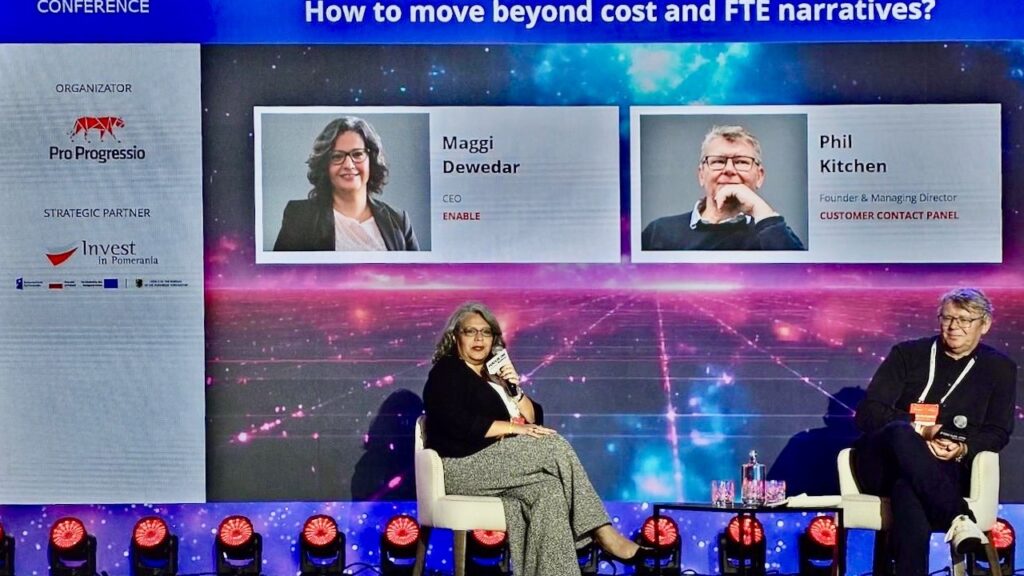
Maggie and Phil were direct about why cost and headcount models have survived this long. For clients, they offer something finance teams love: a fixed, predictable monthly spend that’s easy to benchmark across suppliers and sign off on. For outsourcers, a headcount-based contract is a stable, scalable revenue model. Both sides have built their planning cycles around it and that kind of mutual convenience is hard to disrupt, even when it’s working against the people it is supposed to serve.
The Data Problem, on Both Sides
Outcome-based pricing doesn’t work in a vacuum. It requires information, and that information lives in an existing relationship. Phil and Maggie’s view is that the outsourcers best placed to make this shift are the ones who know a specific client well enough to have the data required to price differently. The common thread isn’t size. It’s depth of knowledge.Flip to the client’s side and you run into the mirror problem. Often, the barrier isn’t outsourcer reluctance. It’s that the client doesn’t have the data to make outcome-based pricing possible in the first place.If you can’t tell an outsourcer what a resolved query looks like, what your average handle time actually means for customer satisfaction, or what a “good” outcome is in measurable terms, you can’t design a pricing model around it. The outsourcer ends up underwriting risk they can’t quantify.And that points to something more fundamental. Outcome-based pricing isn’t really a commercial model. It’s a maturity model. Organisations with poor data can’t buy outcomes. Outsourcers with weak operational control can’t sell them. Procurement functions built around price comparison can’t procure them. The question isn’t whether outcome-based pricing works. The question is whether both organisations involved are mature enough to make it work.Beyond The Data: Legal And Procurement Complexity
Beyond the data problem lies another layer: legal and procurement complexity. Outcome-based contracts are harder to write, harder to govern, and harder to compare. Procurement teams are built around normalisation - the ability to put three suppliers’ proposals side by side and evaluate them on consistent terms. Outcome-based pricing resists that. Two outsourcers might both come to the table with an outcome-based model but structure it differently, based on their own capabilities, technology, and the data they have available. That makes a clean comparison almost impossible, and in a traditional procurement cycle, that ambiguity tends to get resolved in favour of the model that’s easiest to score: FTE and cost.A Question Worth Putting on the Table
If you have an existing FTE-based relationship and you transition it to outcome-based pricing, who should benefit from the efficiency gains? The client, who’s been paying for the service? The outsourcer, whose investment in process and technology created the gain in the first place? Or some negotiated split? There’s no universal right answer, but it’s a question that needs to be on the table before any contract is signed. Leaving it until after the gains materialise is a reliable way to damage a partnership.What the Customer Actually Wants
Cut through all of it and the end customer’s ask is pretty simple. They want their issue resolved. Not transferred. Not told to call back. Not given a half answer by someone who clearly hasn’t read the account history. Resolved, first time, by someone who understood the problem. They don’t care whether the agent is one of twenty or one of two hundred. They care about the outcome.
That’s the most compelling argument for getting this right. An outcome-based model, done properly, aligns what the outsourcer gets paid with what the customer actually values. If the issue is resolved on first contact, everyone wins. If it isn’t, the model should reflect that. In most FTE contracts today, it doesn’t. The outsourcer gets paid the same either way.
That distinction matters for Tier-1 work, because German boards do not approve outsourcing programmes on price alone. They approve them when the operating model is defensible.
Process is Where This Actually Breaks Down
All of which points to the same underlying issue: the process itself isn’t designed for this. Both Phil and Maggie were clear that the way most organisations run procurement is the single biggest structural barrier to outcome-based pricing. Sending an RFP, receiving responses in isolation, then selecting on price doesn’t give an outsourcer the information they need to commit to outcome-based terms responsibly.
What’s needed instead is an interactive process: one where the outsourcer has access to the client’s data early, where there’s genuine dialogue rather than a submission cycle, and where enough time is built in for the outsourcer to develop a credible model. Phil’s position, which he set out clearly on stage, is that this interactivity is a prerequisite. Without it, outcome-based pricing becomes a theoretical aspiration that gets booted the moment a procurement team hits its deadline.
The Move Progressive Outsourcers Should Be Making
If the shift to outcome-based pricing is going to gain real traction, it’s not going to come from buyers asking for it. It’s going to come from outsourcers who stop waiting and start leading. The practical move is straightforward: when responding to an RFP or pricing conversation, submit both. An FTE-based model as requested, and an outcome-based model alongside it. Not instead of it - alongside it. Give the buyer something to compare. Let them see what the difference looks like in real terms. That’s what starts the conversation. One caveat worth naming: in highly structured procurement processes, a dual submission can get screened out before it reaches anyone with the authority to act on it. This works best earlier in the sales cycle, before a formal RFP locks down the submission format, or in less structured buying conversations where there’s still room to shape the brief. The outsourcers already in dialogue with a client - the ones with the relational history and data discussed earlier - are the ones best placed to run this play. Which brings the tier two point back in, but in the right context. Earlier in this article I stepped away from that thinking, and I stand by it - the common thread is depth of knowledge, not size. But when it comes to the appetite to proactively submit a dual model and invite that comparison, it is more likely to be tier two players. That isn’t because they’re necessarily more innovative. It’s because they have less legacy to protect. Many of the largest BPOs have built their operating models, forecasting disciplines and shareholder expectations around the growth of FTE-based revenue. Proposing a model that fundamentally reduces the value of headcount growth is not a strategic conversation they’re naturally incentivised to have. Tier two players without that legacy position have every reason to.
The Bottom Line
The FTE model isn’t going away overnight. Finance teams value its predictability. Large outsourcers have built businesses around it. And plenty of clients aren’t yet in a position to move. But the direction of travel is clear. AI is accelerating that journey.
Once technology can reduce contacts, increase automation and improve resolution rates at scale, activity-based pricing becomes increasingly difficult to defend commercially. Outcome-based pricing asks both sides to do harder things: clients to share more information and invest in longer evaluation cycles, outsourcers to take on more risk and invest in the tools that help them manage it. The outsourcers closing that gap fastest are the ones using technology to build the evidence base that makes outcome-based pricing defensible. The reward, if it works, is a model that actually serves the person at the end of every interaction.
I was in Poland's Tri-City for Pro Progressio’s Follow the Leaders conference. The observations from Phil Kitchen (Customer Contact Panel) and Maggie Dewadar (Enable) are drawn from their Fireside Chat, “Value over Activity: How to Move Beyond Cost and FTE Narratives.” The additional points on procurement complexity and the efficiency gains question are my own - Chris Hague.
If you’d like to continue the conversation or explore what this shift might mean for your organisation, our team is always open to connecting - click through to CEO George Jabesh or EU Marketing Director Chris Hague .