The ITO Event in Warsaw Last Week And What You Missed
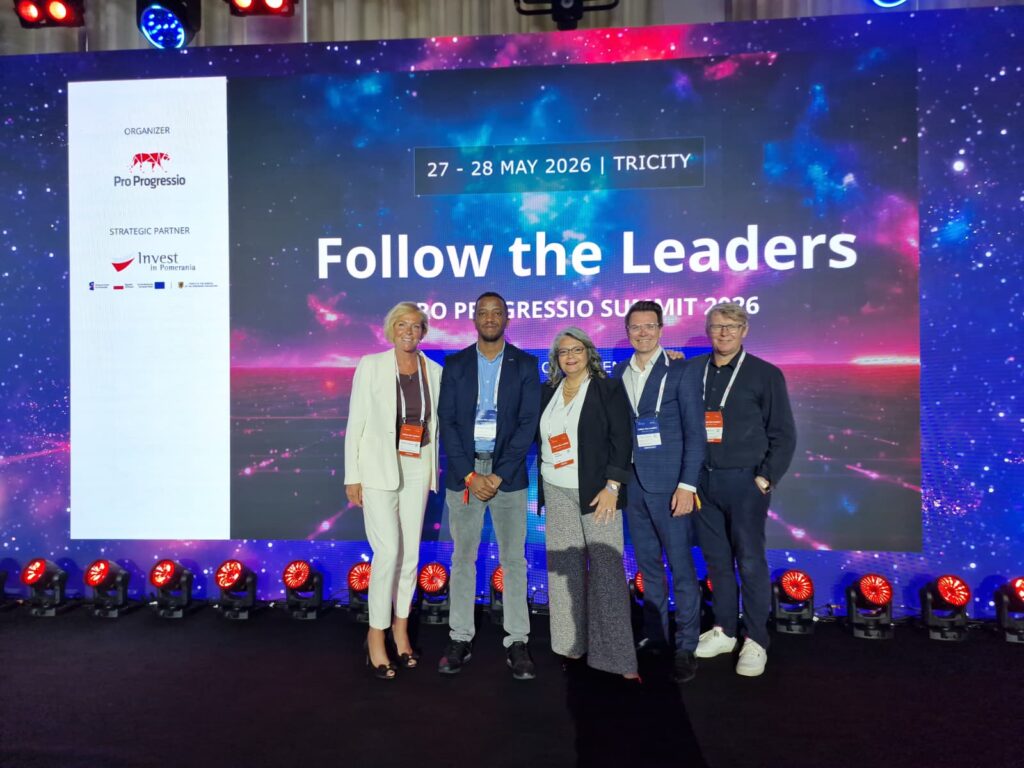
Last week I stood in front of a room of Polish C-level technology executives and made the case for Africa as a serious ITO destination. Not a future destination. Not an emerging one. Now.
The event was Tech Bridge: Connecting Polish & African IT Excellence, organised by Pro Progressio and hosted alongside Elvis Melia (MeliaCRED) in Warsaw — a focused, invitation-only session designed to put African technology operators in front of the Polish IT decision-makers who are quietly running out of road on their current sourcing models.
The conversation that followed was one of the most commercially honest I've had at an industry event in years. No panel platitudes. No vendor theatre. Just senior people acknowledging, with varying degrees of comfort, that the arithmetic of European IT delivery is broken — and asking serious questions about what comes next.
The problem every Polish IT leader in that room recognised
If you run a Polish technology company serving European clients, the margin compression is not theoretical. Wage inflation across Central and Eastern Europe has eroded the cost advantage that made this region so attractive to Western buyers. The talent you need — mid-to-senior software engineers, ITSM professionals, DevOps specialists — is increasingly expensive to hire, harder to retain, and in shorter supply than at any point in the last decade.
Meanwhile your largest potential client base, Germany, faces a deficit of 149,000 IT workers that independent research projects will quadruple by 2040. That is not a talent shortage. That is a structural crisis — and for Polish operators with the right delivery partners, it is a significant commercial opportunity.
The question in Warsaw was not whether to act. It was where to find the capacity to do so.
Why Africa — and why now
The serious operators have already decided. Teleperformance, the world's largest CX and IT services company, is scaling to 5,000 seats in Nairobi. CCI Global has committed $50 million to a single facility there, with a stated trajectory to 10,000 staff serving clients across the UK and Europe. ManpowerGroup's Experis division — one of the event's partners and a $5 billion global IT brand — has Africa as part of its location architecture on its radar.
These are not exploratory pilots or market-entry experiments. They are infrastructure-grade capital commitments from organisations whose risk models are shaped by contractual accountability to enterprise clients. When the world's largest brands are building at scale in Africa, the proof of concept is done. The only question left is whether you are positioned to benefit from it.
Kenya specifically offers something that most of the African conversation misses: it is not a low-cost play dressed up as a capability argument. It is a genuine capability market that also happens to be significantly more cost-competitive than the European alternatives. English is an official language of government and business — not as a second language, as the language. GMT+3 places Nairobi two hours from Warsaw, which means full European business-hours coverage, real-time collaboration, and no meaningful timezone friction for daily delivery. Kenya's Data Protection Act 2019 was modelled directly on GDPR. The compliance gap that European buyers still cite was formally closed years ago.
What the room actually responded to
Three things drew visible engagement from the audience, and they are worth naming because they are not the things that usually feature in outsourcing presentations. The first was operational detail. Not headline statistics or credential lists — the actual mechanics of how delivery works, how problems get escalated, how SLAs are governed in practice. In a room of IT buyers who have been burned by operators who looked good in proposals and underdelivered in execution, specificity is the only currency that matters.
The second was the double-tick standard. The acknowledgement that operating from Africa carries a perception burden — and that this means holding yourself to a higher standard of proof than any nearshore competitor — landed well. It is not a defensive position. It is a confidence play. Buyers respect operators who have thought harder about the problem than the buyers themselves have.
The third was infrastructure ownership. An operator who owns their facility, controls their power redundancy, and manages their own IT resilience can have a categorically different conversation about continuity commitments than one leasing floor space in a shared building. For enterprise buyers evaluating offshore delivery for the first time, this is not a cosmetic detail. It is a governance signal.
What I took away
The operators who have failed to gain traction in African ITO have almost universally made the same mistake: attempting to execute without a capable, commercially accountable partner present on the European side. The talent exists. The infrastructure exists. The compliance frameworks exist. What has been missing is a credible connector between the African delivery capability and the European buyer's confidence threshold.
That is the gap — and it is closing faster than most people in the room had assumed.
Pro Progressio has signalled that this is the beginning of a sustained programme. The first session produced qualified conversations. If the pattern holds, the next one will produce signed engagements. The companies in that room in Warsaw have a head start. The companies that weren't there are already a conversation behind.
If you're evaluating your IT delivery capacity for European clients — whether that is managed service desk, software development, systems monitoring, or technical support — I'd welcome a direct conversation.
If you’d like to continue the conversation , our team is always open to connecting - click through to CEO George Jabesh or EU Marketing Director Chris Hague .
Chris Hague is Director of Partnerships & Marketing at Nakama Tech Limited, a Nairobi-based ITO and BPO operator delivering managed IT services for European enterprise clients. ISO 9001 · ISO/IEC 27001 · GDPR-Compliant.www.nakama-tech.com